
A land conflict that has lasted for more than a decade in the customary territory of Muara Tae, East Kalimantan, has escalated once again. The Muara Tae Indigenous community has reported land clearing activities allegedly carried out by PT Borneo Surya Mining Jaya (PT BSMJ), an oil palm plantation company that is part of First Resources Ltd. The land conflict remains unresolved, as the company has once again carried out land clearing in an area adjacent to land that was cleared several years ago. The affected area is part of the customary territory of the Muara Tae Indigenous community.
The company had previously suspended its land clearing activities in the area in 2012 following strong opposition from the Indigenous community and the submission of numerous complaints. Various grievance mechanisms were pursued, including complaints filed with the company’s corporate group, the RSPO Complaints System, and the National Inquiry conducted by Indonesia’s National Commission on Human Rights (Komnas HAM). However, the land boundary dispute between Muara Ponaq and Muara Tae has never been fully resolved by the company. This is despite the fact that PT BSMJ is part of First Resources, an Roundtable on Sustainable Palm Oil (RSPO) member, and is therefore expected to uphold its sustainability policies and commitments to respect the rights of Indigenous Peoples and local communities, including their customary territories.
Through its sustainability policy, First Resources states its commitment to respecting the rights of Indigenous Peoples and local communities, including customary land rights and the right to give or withhold Free, Prior and Informed Consent (FPIC). The company also commits to resolving conflicts with communities through open, transparent, and consultative processes. However, recent developments in Muara Tae raise questions about how these commitments are being implemented in practice, as the community continues to report land clearing and land development within areas they identify as part of their customary territory, where the land dispute remains unresolved.1
Furthermore, in 2025, PT BSMJ was again reported to have carried out land clearing activities in the Muara Tae area. According to the Indigenous community, the affected area forms part of the last remaining forest in their customary territory and serves as an important source of livelihood and living space for the Muara Tae Indigenous community.
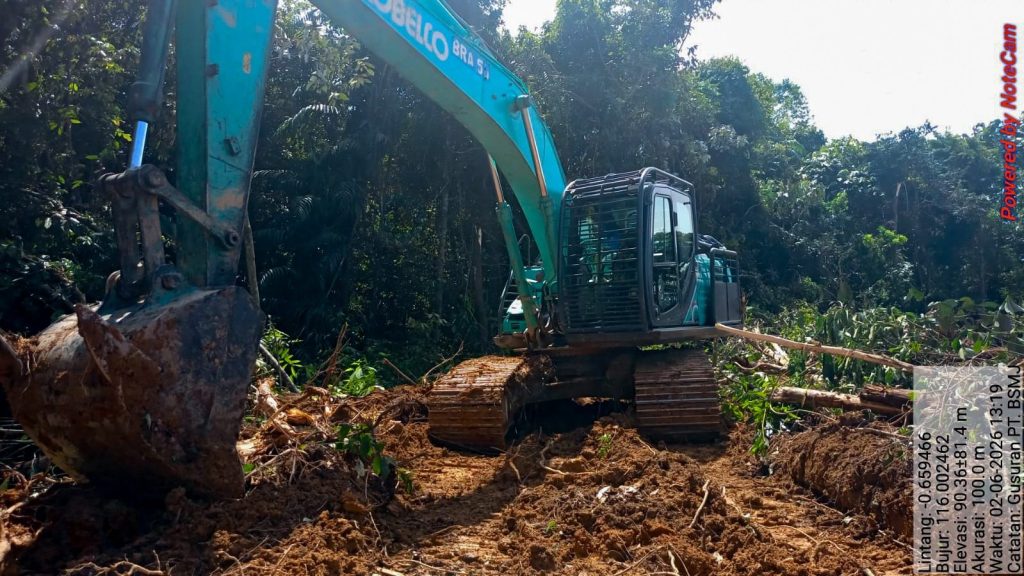
Documentation: Contributed Photo.
Throughout these activities, the community has repeatedly taken various steps to express their objections, including peacefully attempting to stop the activities on the ground, submitting formal letters of objection to the company, and participating in various dialogue and mediation processes. Nevertheless, the community reports that the land clearing activities have continued.
The latest information received from the field indicates that land clearing is still ongoing in several areas claimed as part of the Muara Tae Indigenous community’s customary territory. These areas have long served as a source of livelihood for the community and hold significant social, cultural, and ecological value for the survival and well-being of the Muara Tae Indigenous community. Amid a conflict that has persisted for years without a fair resolution, the community continues to defend their living space against the threat of losing their remaining customary territory. .
About Muara Tae Village
Muara Tae is a village in Jempang Sub-district, West Kutai Regency, East Kalimantan, inhabited primarily by the Dayak Benuaq Indigenous community. The area is widely known for its long-standing tenure conflict and the community’s struggle to protect their forests and ancestral lands from the expansion of oil palm plantations. Muara Tae is rich in natural resources that support the community’s daily lives. Their forests provide food, medicinal resources, building materials, and other forest products, while also serving as an important part of their cultural identity.
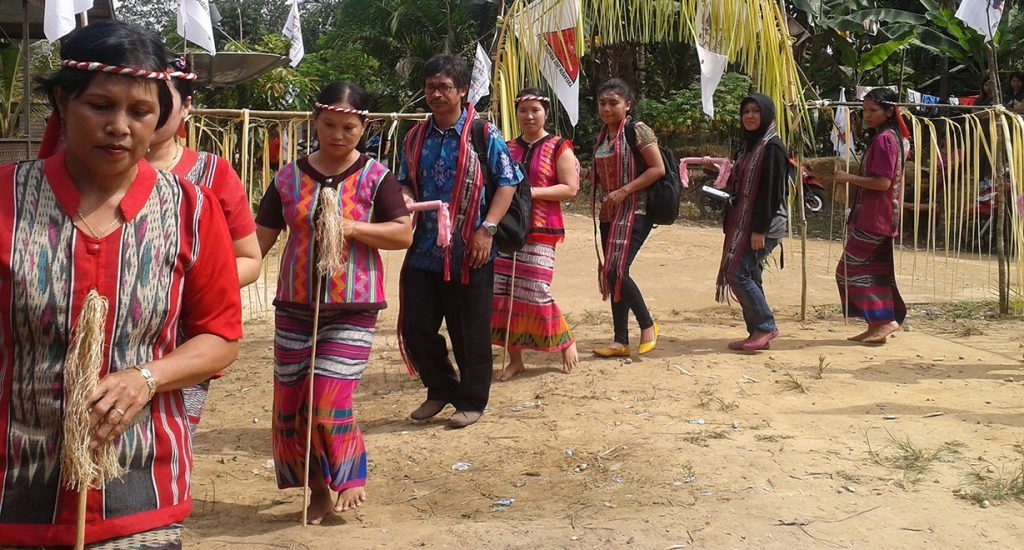
Documentation: Courtesy of equatorinitiative.org
For the Muara Tae Indigenous community, the area currently being cleared is more than just a disputed piece of land. The community describes it as the last remaining forest within their customary territory, which has long served as a source of livelihood, a cultural space, and the last remaining safeguard for the environment amid the expansion of oil palm plantations that has continued for more than a decade.
For generations, the customary territory of Muara Tae Village has shared boundaries with neighboring villages, including Muara Ponaq. For many years, these boundaries were recognized by the surrounding communities and never gave rise to boundary disputes. The residents of each village carried out their traditional farming activities within their respective territories, in accordance with the customary boundaries that have been passed down through generations under the traditions of the Dayak Benuaq Indigenous community.
The issue began in 1991 when the Kutai Regency Tourism Office published a tourism map of Jempang Sub-district. On the map, the boundary between Jempang and Muara Pahu Sub-districts was shown cutting across the customary territory of Muara Tae Village by approximately six kilometers, leaving the boundary only about 0.5 kilometers from the village. This did not correspond to the natural boundaries that had long been recognized and used by the community.
Since then, the Muara Ponaq Village Government has maintained that its territorial boundary follows the line shown on the tourism map and has claimed the land within that boundary as belonging to the Muara Ponaq community, even though Muara Ponaq residents have never carried out traditional farming in the area that has long been recognized as part of Muara Tae. The Muara Tae Village Government rejected the boundary shown on the map and has continued to uphold the natural boundary based on the history and customary law of the Dayak Benuaq Indigenous community.
This difference in perspectives eventually led to a boundary dispute between Muara Tae Hamlet and Muara Ponaq Hamlet. Following the change in their administrative status to Muara Tae Village in 2004 and Muara Ponaq Village in 2010, the dispute has continued to this day without any meaningful resolution.
KOMNAS HAM National Inquiry and the Equator Prize
The struggle of the Dayak Benuaq Indigenous community of Muara Tae to defend their territory has received attention at both the national and international levels. In 2013, the Muara Tae community filed a complaint with Indonesia’s National Commission on Human Rights (Komnas HAM) regarding the agrarian conflict and the appropriation of their customary territory. Subsequently, between 2014 and 2015, Muara Tae was one of the Indigenous communities that presented its case during the National Inquiry on the Rights of Indigenous Peoples over Their Territories in Forest Areas, organized by Komnas HAM.2 The National Inquiry gathered testimonies from Indigenous Peoples across Indonesia regarding tenure conflicts, the appropriation of customary territories, and human rights violations occurring in forest areas.
During the inquiry, the Muara Tae community described the various challenges they faced, including agrarian conflicts, the expansion of extractive industries, the criminalization of community members, and the lack of state protection for the rights of Indigenous Peoples to their lands, territories, and natural resources. The findings of the National Inquiry were subsequently published by Komnas HAM in 2016 and included a number of recommendations to the Government to recognize and protect the rights of Indigenous Peoples.
Amidst this ongoing struggle, on September 21, 2015, the United Nations through UNDP announced the Muara Tae Indigenous Community as one of the recipients of the 2015 Equator Prize. Out of 1,461 nominations from 126 countries, only 20 communities worldwide received the award. Muara Tae received this recognition for its dedication and commitment to defending, protecting, and restoring its remaining customary forest from the pressures of forestry, mining, and oil palm plantation companies, while also advocating for the rights of Indigenous Peoples to their lands, territories, and natural resources.3
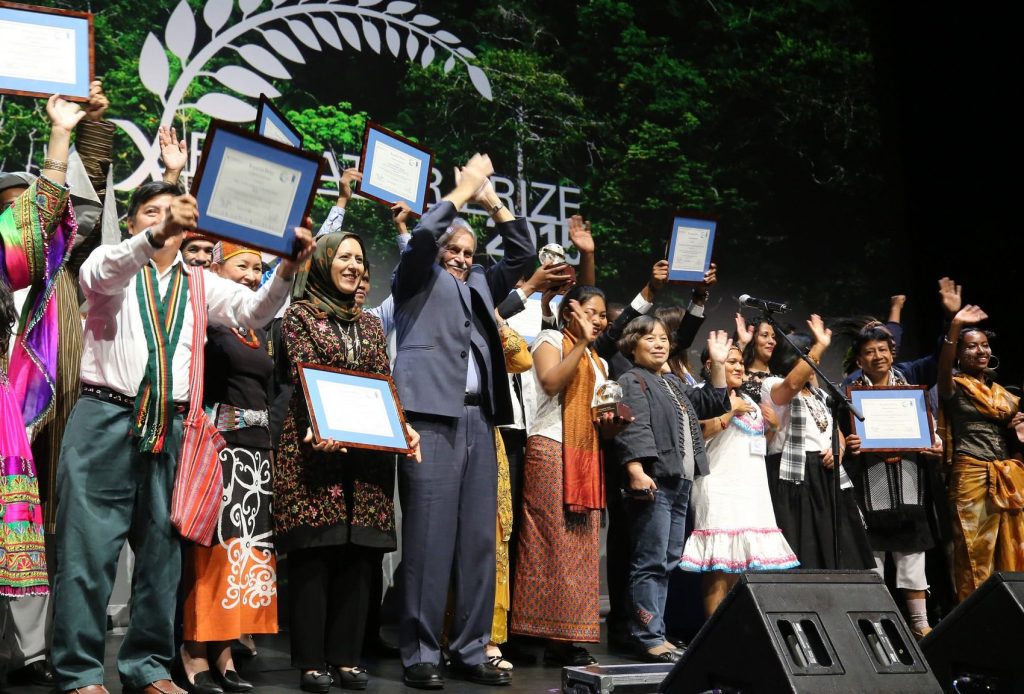
Documentation: Courtesy of equatorinitiative.org
The award ceremony was held on 7 December 2015 in Paris, France, alongside the 21st United Nations Climate Change Conference (UNFCCC COP21). On that occasion, Petrus Asuy, one of the leaders of the Muara Tae movement, represented the community in receiving the award and shared the experiences of the Indigenous community in protecting their remaining customary forest amid the continuing pressures of extractive industries.4
The award marked international recognition of the Muara Tae community’s long-standing struggle. For decades, the community has defended its customary territory through participatory mapping, the establishment of forest guard posts, biodiversity inventories, the rehabilitation of degraded areas, the cultivation of native tree seedlings, and various community-led forest protection initiatives.
Following the Constitutional Court Decision No. 35 of 2012 on Customary Forests, Muara Tae also became one of the locations for the Customary Territory Rehabilitation Movement initiated by the Indigenous Peoples Alliance of the Archipelago (AMAN). Through this initiative, the Muara Tae community set a target of rehabilitating 700 hectares of its customary territory by replanting various native tree species and restoring areas degraded by the company’s operations.
However, more than a decade after the Muara Tae case was presented during the Komnas HAM National Inquiry and eleven years after receiving the Equator Prize, the Muara Tae community continues to face the same threats. Land clearing, land development, and agrarian conflicts are still ongoing. This situation demonstrates that international recognition, environmental awards, and even the various global commitments discussed at climate forums such as COP21 have not automatically been able to stop the appropriation of customary territories or provide effective protection for Indigenous Peoples who are at the forefront of protecting forests.
Ironically, the various efforts undertaken by the Muara Tae community from filing complaints with Komnas HAM and presenting their case during the National Inquiry to receiving international recognition through the Equator Prize have not been enough to bring an end to the conflict they continue to face. Eleven years after receiving the award and more than a decade since the oil palm conflict first emerged, the people of Muara Tae are still standing in front of heavy machinery to defend the same customary territory.
The Shadow of Palm Oil Companies and the First Resources Group
Although the land clearing activities currently being reported involve PT BSMJ, the conflict in Muara Tae is not a new issue. The dispute over customary territory, village boundaries, and land acquisition that underlies the current conflict has developed since oil palm plantation companies entered the Muara Tae area in 2011, including PT Munte Waniq Jaya Perkasa (PT MWJP).
PT MWJP began operating in the customary territory of Muara Tae Village without the knowledge of either the Muara Tae Village Government or the local community, as no prior consultation or socialization regarding the company’s permits and operational plans had ever been conducted. The company’s presence was first discovered on 16 October 2011, when the Muara Tae Village Government visited PT MWJP’s office in Muhur to verify information about land acquisition carried out by residents of Muara Ponaq on land located within the customary territory of Muara Tae.
During the meeting, the company presented its concession map and land acquisition map, showing that PT MWJP had acquired approximately 638 hectares of land claimed to have been obtained from residents of Muara Ponaq, even though the land was located within the customary territory of Muara Tae Village. The Muara Tae Village Government immediately raised its objection, stating that the area had historically and customarily been part of its territory. In response, the company stated that it had determined the village boundary based on maps and information provided by the Muara Ponaq Village Government and the Sub-district Leadership Coordination Forum (Muspika) of Siluq Ngurai Sub-district.
The conflict escalated between October and December 2011 when PT MWJP began carrying out land clearing and constructing block roads in the disputed area. On 23 October 2011, the Muara Tae community discovered that the company had opened a road approximately 2,335 meters long and 20 meters wide, resulting in damage to community crops, forests, and the headwaters of the Nayan River, which serves as the community’s source of water.
The community subsequently halted the company’s activities and submitted a series of letters of objection to PT MWJP, the police, the sub-district government, and the West Kutai Regency Government. A number of mediation meetings were held on 7 November and 28 November 2011 but failed to reach a resolution, as each party maintained its respective territorial claim. On 19 December 2011, the Regent of West Kutai issued a letter concerning the resolution of the land dispute between the Muara Tae community and PT MWJP. Meanwhile, the community continued its efforts to seek the suspension of the company’s activities, obtain the company’s licensing documents, and report the parties alleged to have unlawfully sold the customary land of Muara Tae Village.
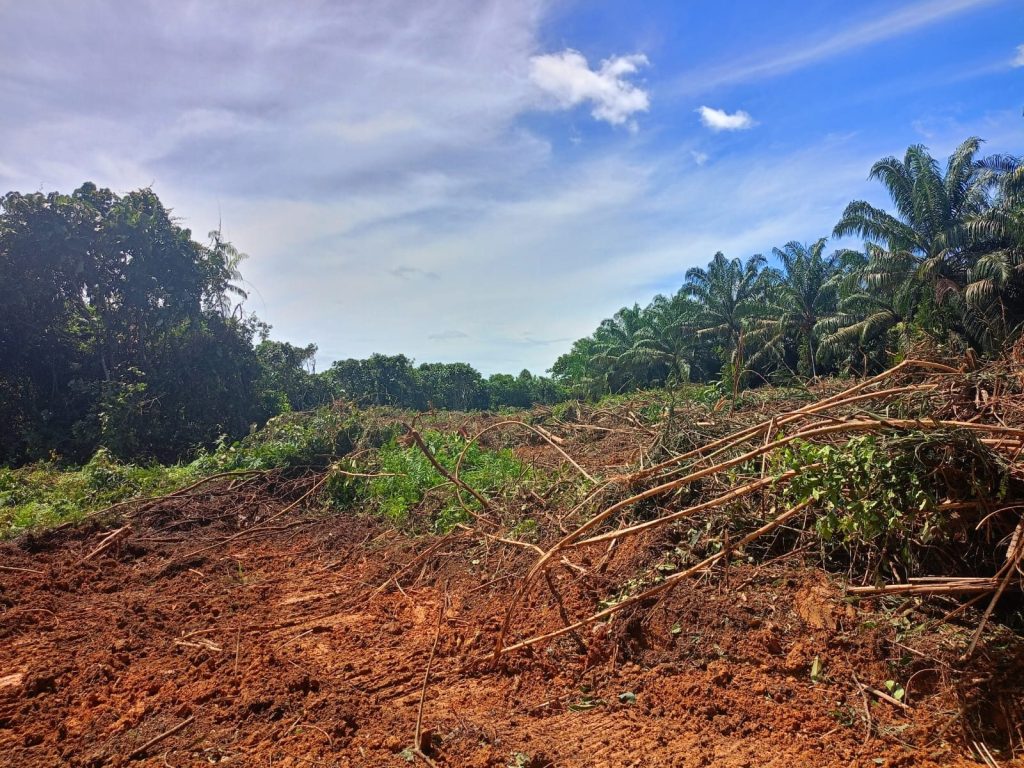
Documentation: Contributed Photo.
In 2012, the dispute developed into a broader conflict over the determination of the boundary between Muara Tae and Muara Ponaq. On 31 May 2012, the Regent of West Kutai issued a Decree establishing the village boundary, which was received by the Muara Tae Village Government on 5 July 2012. The decree was immediately rejected because it was considered inconsistent with the historical boundary and the customary boundary recognized by the Dayak Benuaq Indigenous community.
Throughout July 2012, the Muara Tae Indigenous community repeatedly halted heavy machinery and land clearing activities carried out by PT MWJP in several disputed areas. The conflict continued into 2014 when the company resumed land clearing and planting activities in Muara Tae, prompting the community to guard their customary territory and leading to tensions with security forces. In June 2014, PT MWJP filed criminal complaints with the West Kutai District Police against several members of the Muara Tae community, including Petrus Asuy and other community leaders. By December 2014, several community members had received summonses for questioning. At that time, the land and boundary dispute between Muara Tae Village, Muara Ponaq Village, and PT MWJP remained unresolved and had not reached a settlement acceptable to all parties.
Meanwhile, PT BSMJ, a subsidiary of Singapore-based First Resources Group, was also involved in a conflict over the customary land of the Muara Tae Indigenous community. In 2012, PT BSMJ began clearing approximately 400 hectares of land in the Utaq Melinau block, which forms part of the customary territory of Muara Tae. The land clearing was met with resistance from the Muara Tae Indigenous community because it took place within the Utaq Melinau forest area. The company has obtained sustainability certification, including the Indonesian Sustainable Palm Oil (ISPO) certification, which was issued on 8 May 2025 by the certification body PT Mutu Hijau Indonesia.5 In addition to ISPO, PT BSMJ is also a member of the RSPO and is certified by BSI Services Malaysia.
The conflict between the Muara Tae Indigenous community and PT BSMJ was also brought before the RSPO Complaints System on 17 October 2012 by the Environmental Investigation Agency (EIA) UK, AMAN, and the Muara Tae Indigenous community. The complaint alleged that the company had begun land clearing before completing the RSPO New Planting Procedure (NPP), cleared land without obtaining FPIC, and failed to conduct meaningful negotiations and provide adequate compensation to the affected community.6
Although the case was processed through the RSPO Complaints System for several years and was formally closed on 22 December 2015, the conflict on the ground was never fully resolved. To this day, the Muara Tae Indigenous community continues to assert its claim over the disputed customary territory and faces ongoing land clearing in the same area. The renewed escalation of the conflict in 2026 demonstrates that the various efforts undertaken through the company’s grievance mechanisms, government processes, and sustainability certification schemes have yet to produce a resolution that is acceptable to the Muara Tae Indigenous community.7
Ongoing Land Clearing Further Threatens the Indigenous Community’s Living Space
In June 2026, PT BSMJ resumed land clearing and oil palm planting in areas that remain under dispute. According to reports from the Indigenous community, these activities have taken place almost every day, forcing community members to take turns guarding their remaining customary territory and forming a human barricade to prevent further encroachment.
On 18 June 2026, PT BSMJ once again carried out land clearing and oil palm planting within the customary territory of Muara Tae. The community also reported that the company’s activities were accompanied by police officers, as well as several residents of Muara Ponaq and other individuals accompanying the company. The situation on the ground subsequently became increasingly tense, raising the risk of physical confrontation and threatening the safety of community members.
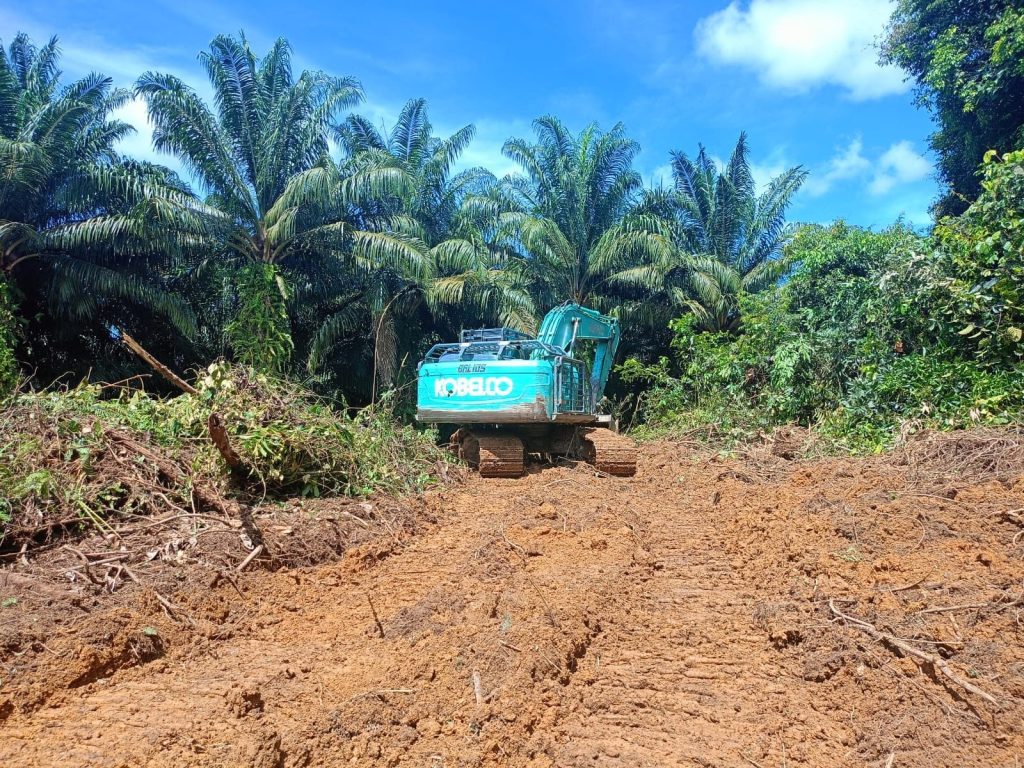
Documentation: Contributed Photo.
The land clearing has damaged various crops belonging to community members. The community attempted to engage in dialogue and requested that the company suspend its activities until the dispute is resolved. However, their request was not heeded. At the time this article was written, PT BSMJ continues its land clearing and oil palm planting activities. The Muara Tae Indigenous community has expressed concern that the customary territory they have defended since 2011 could be lost unless immediate action is taken by the Government and the relevant authorities to protect their customary territory and resolve the dispute fairly.
References
- First Resources Ltd, Sustainahility Policy.
- Komisi Nasional Hak Asasi Manusia Republik Indonesia (Komnas HAM). Laporan Inkuiri Nasional Hak Masyarakat Adat atas Wilayahnya di Kawasan Hutan, 2016.
- Equator Initiative – United Nations Development Programme (UNDP). Equator Prize 2015 Winners Announcement. The official announcement of the 2015 Equator Prize winners, including the Muara Tae Indigenous Community, was made on September 21, 2015, at the United Nations Headquarters in New York.
- Equator Initiative – UNDP. Equator Prize 2015 Award Ceremony. The award ceremony took place on December 7, 2015, at the Théâtre Mogador in Paris, France, coinciding with the UNFCCC COP21.
- Data ISPO Kementerian Pertanian.
- RSPO, Complaint on PT Borneo Surya Mining Jaya (First Resources Ltd), filed by the Environmental Investigation Agency (EIA), AMAN, and the Muara Tae Indigenous Community on October 17, 2012.
- First Resources Ltd, Grievance List Updated June 2024, noting that the Muara Tae case (RSPO Complaints System) regarding FPIC involving PT Borneo Surya Mining Jaya was closed by the RSPO on December 22, 2015.


