Kaoem Telapak sent a cover letter to the Europe Union (EU) Commission regarding the proposal to delay the EUDR for the second time for 12 months, starting from December 2025......
The policy brief from the Coalition to Guard the Indigenous Peoples Bill 2025 centres on the concerted efforts to enact the Indigenous Peoples Law in Indonesia. It underscores the government's unfulfilled promises concerning the recognition and protection of Indigenous Peoples' rights......
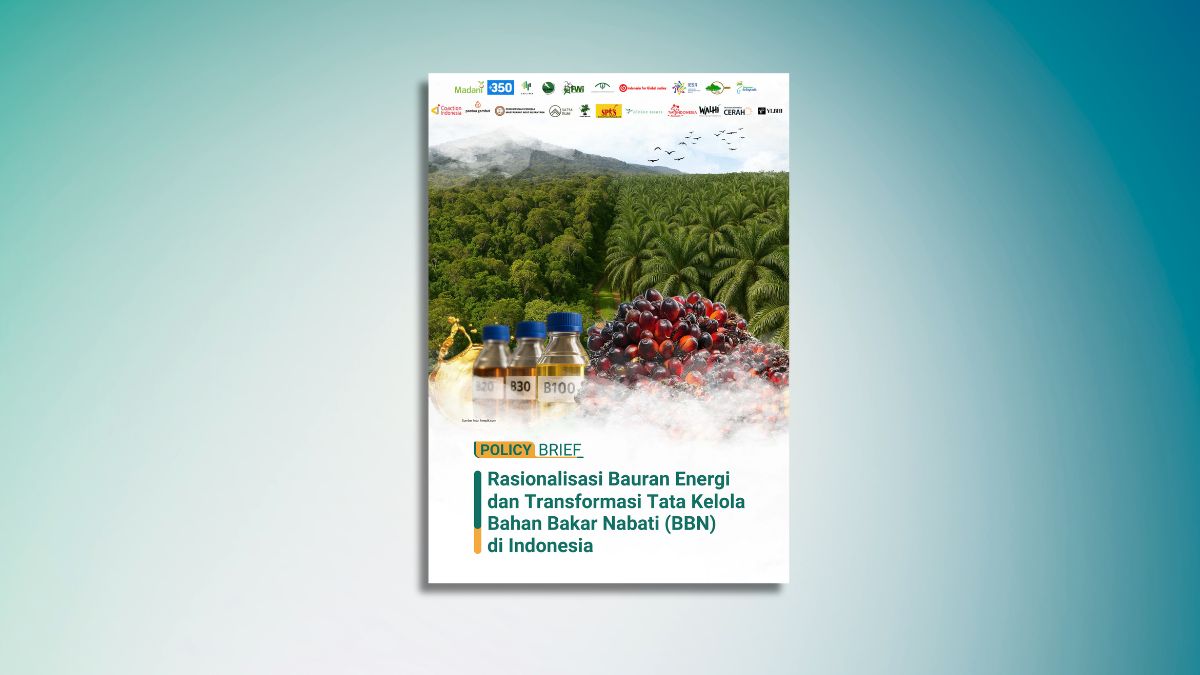
In a pivotal move towards energy transformation, Indonesia is set to revolutionise its biofuel governance, with a keen focus on palm oil as the primary feedstock for biodiesel. This strategic shift, while promising substantial economic benefits, also brings forth pressing environmental and social challenges......
The plan to clear 20 million hectares of forest for food and energy will be the largest legalised deforestation project in Indonesia's history. If just 4.5 million hectares of natural forests are cleared, this will release 2.59 billion tonnes of carbon emissions, accumulating the amount of emissions that will be released from the 20 million hectares of forests that will be cleared. This plan contradicts Indonesia's global commitments to protect biodiversity, reduce emissions through the Nationally Determined Contributions (NDC) scheme, and recognise and protect Indigenous Peoples as mandated in the Convention on Biological Diversity (CBD). In addition, this plan also.....
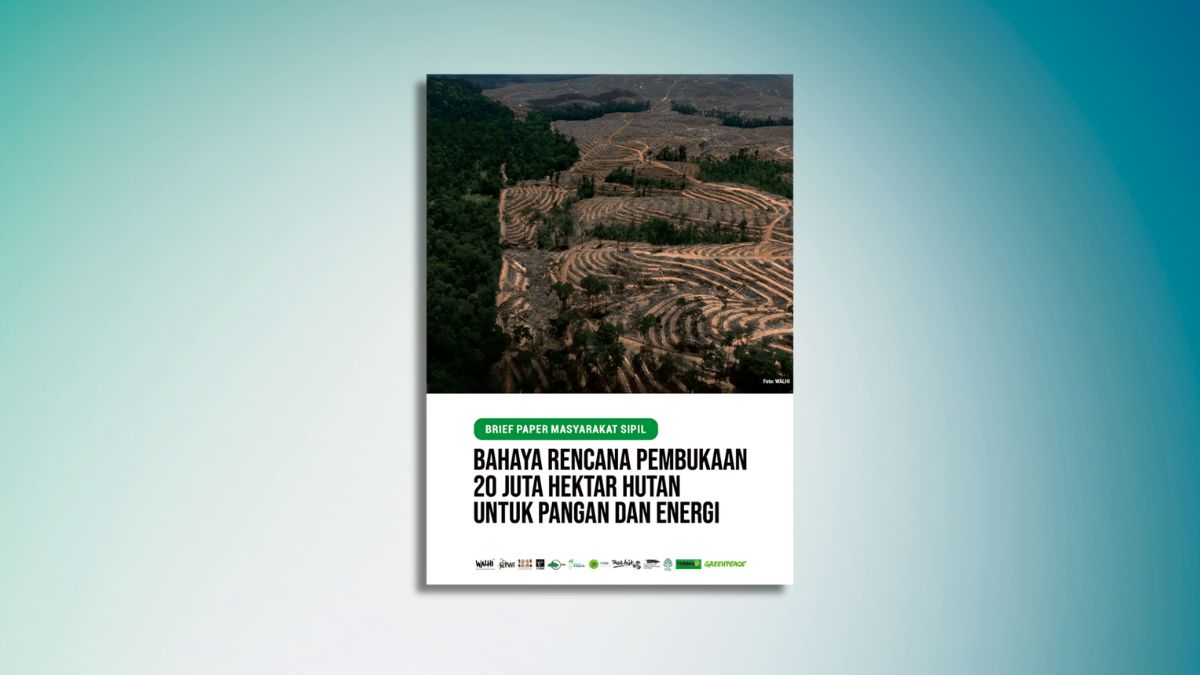
Indonesia’s palm oil industry faces numerous domestic and global challenges. From an economic perspective, the expansion of palm oil plantations does not align with the welfare of the producing regions......
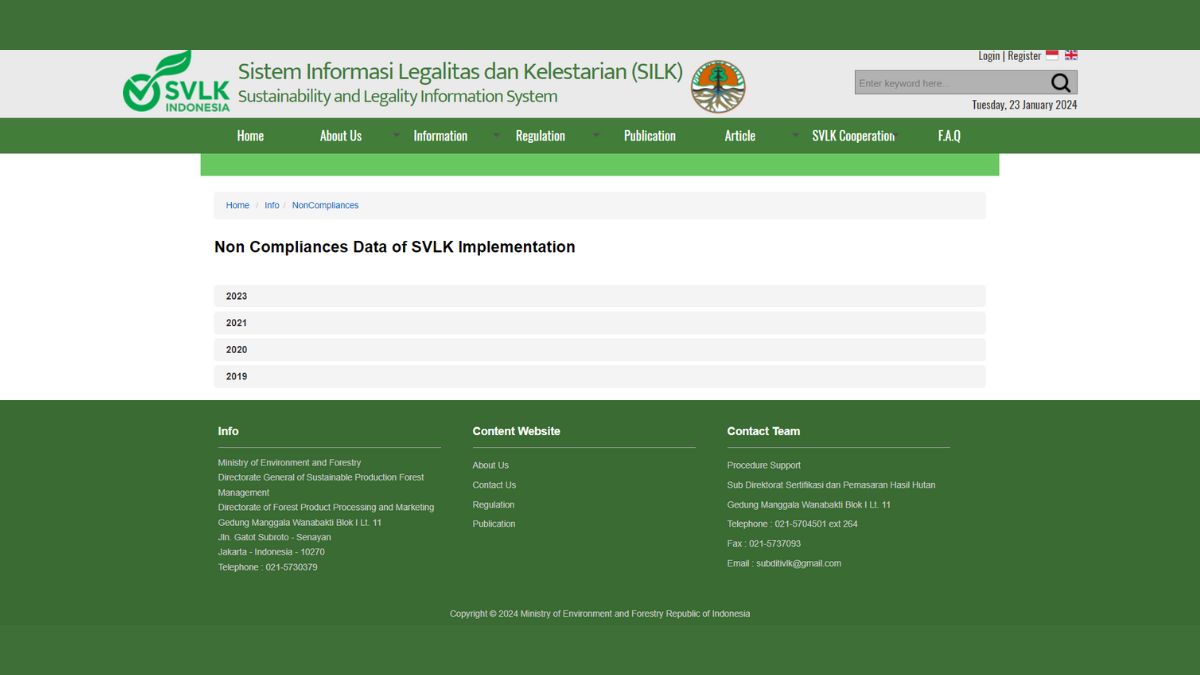
This document is an in-depth analysis collected and compiled by Kaoem Telapak as input in improving and developing the system on the non-compliance page on the SILK website......
It is undeniable that the palm oil industry plays a strategic role in the national economy. In 2020, Statistics Indonesia recorded that volume of palm oil product exported reached 34 million tonnes. In addition, the industry also provides jobs and livelihoods for millions of smallholder families. However, it needs to be understood that the various challenges faced by the industry is, among others, low levels of prosperity among smallholders, the numerous underdeveloped villages around plantations, the gap between central and local incomes, low tax payment, to ecological problems and the rampant social conflicts, which in turn reduces palm oil product.....
Analysis by Kaoem Telapak and our partner EIA reveal Indonesia is not set to fundamentally improve its palm oil standards.
The revision of the Indonesia Sustainable Palm Oil (ISPO) certification scheme, ongoing since 2016, had been seen a key chance for the country to improve the sustainability of its palm oil sector and address the negative environmental and social impacts of the industry. Indonesia has 16.38 million hectares of oil palm plantations – the largest of any country in the world.
But analysis of the new draft ISPO standards and regulations show the proposed revisions do.....
After two years of FLEGT Licence implementation, Indonesia recorded a significant increase in wood product exports to the European Union. However, improvements are needed......